The house-cleaning pitch has two versions. Version one: “clean houses yourself and keep everything.” Version two: “hire cleaners and build an empire while you sip coffee.” Both are real businesses — but they pay the owner very differently, and the transition between them is where most owners are surprised. Here’s what a house cleaning business actually keeps, solo versus with employees.
Solo: you keep a lot, because you’re the labor
As a solo operator, the margin looks fantastic — because you keep both the profit and the labor dollars a boss would pay someone else.
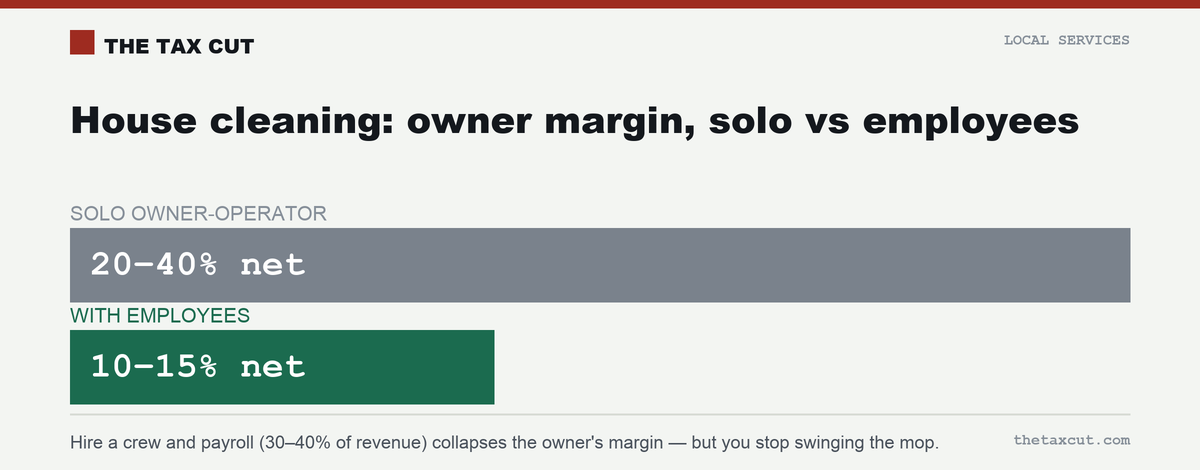
A solo house cleaner or small team typically generates $30,000–$70,000 a year serving 5–20 recurring clients, with take-home margins of 20–40% — far above the ~6.3% industry average, precisely because there’s no payroll. Every dollar the client pays that isn’t supplies or gas is yours.
Source: Jobber — Is a cleaning business profitable? (2026) · checked 2026-07-29
The ceiling is time: you can only clean so many houses a day, so solo income is capped by your own hours. Which is exactly why owners hire — and exactly where the math changes.
With employees: the margin collapses (but the model scales)
The moment you pay cleaners, the biggest line on your P&L becomes payroll — and the owner’s slice shrinks dramatically.
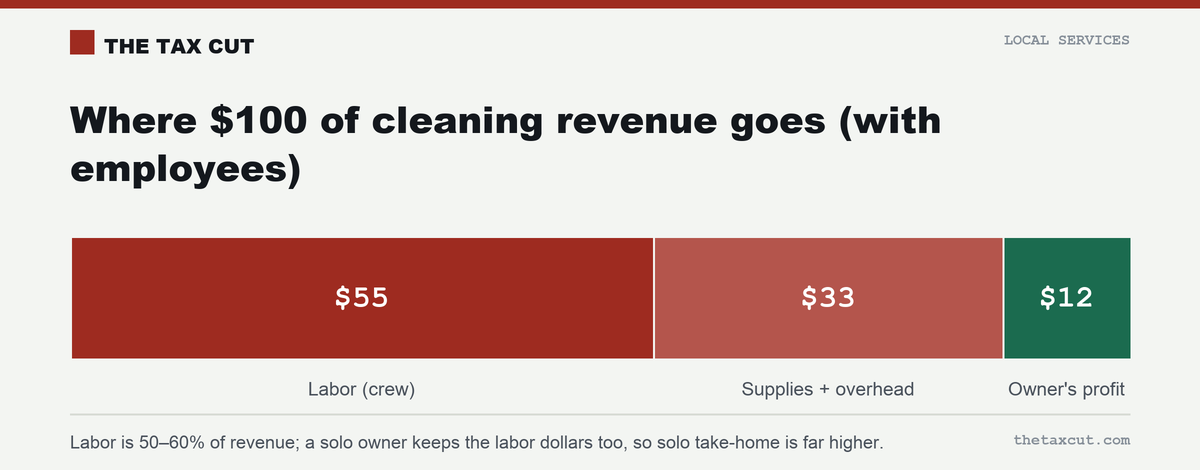
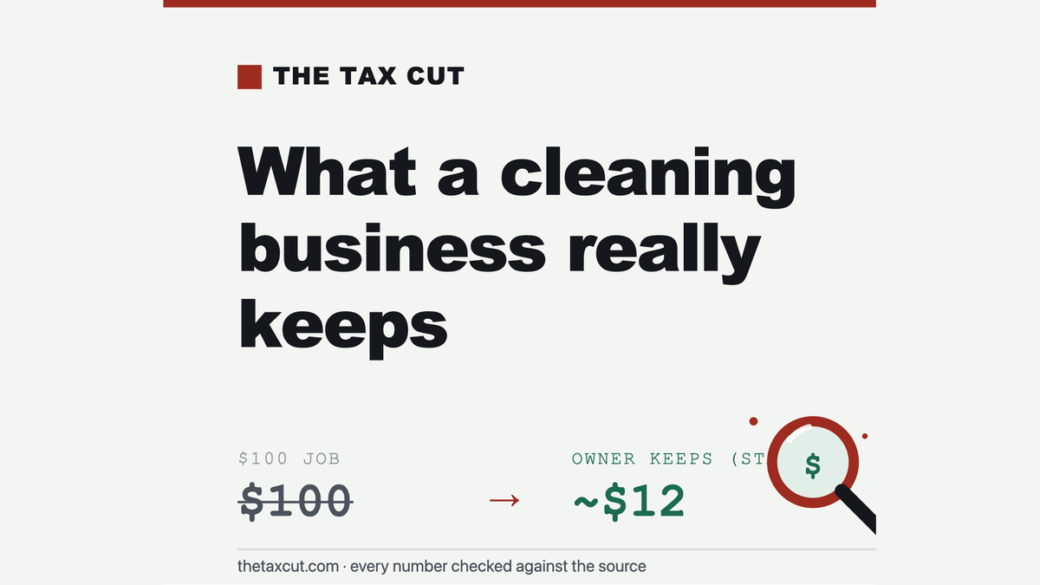
Labor runs 50–60% of revenue once you employ cleaners (payroll alone is 30–40%), overhead is another 15–25%, and the owner’s net margin falls to 10–15%. On a $100 job, the owner might keep ~$12 instead of the $50+ a solo cleaner banks. The trade is deliberate: you earn less per job but can run many jobs at once without swinging a mop.
Why owners still hire
If the margin drops so hard, why do it? Because 10–15% of a big number beats 40% of a small one — and it beats being personally chained to every job:
- Scale. Ten crews cleaning simultaneously can out-earn one exhausted owner, even at a thinner margin.
- Freedom. The owner shifts from cleaning to selling, scheduling, and managing — a business, not a job.
- Higher-value work. Deep cleans, move-outs, and turnovers bring more per job than standard maintenance, cushioning the margin.
The mistake is expecting solo margins at employee scale. Owners who hire and still price for 30% net quietly lose money on payroll; the ones who succeed reprice for the 10–15% reality and win on volume.
So how much does a house cleaning business make?
- Solo: $30k–$70k/year, 20–40% take-home margin (you keep the labor dollars) — capped by your own hours.
- With employees: owner margin 10–15%, but scalable well past a solo ceiling.
- Labor is 50–60% of revenue once you hire; overhead another 15–25%.
- The highest-margin work is deep cleans, move-outs, and turnovers.
House cleaning is a legitimately profitable business either way — but “solo income” and “agency income” are two different animals. Solo, you keep a big slice of a small pie. With a team, you keep a small slice of a much bigger one. Just don’t price the second like the first, or payroll will eat the difference.
People also ask
Is a house cleaning business profitable in 2026?
Yes. Solo operators keep 20–40% of revenue (they keep the labor dollars too) and earn $30k–$70k/year. With employees, the owner’s margin drops to 10–15%, but the business scales past a solo ceiling.
Source: Jobber — Cleaning business profitability · checked 2026-07-29
How much do house cleaning business owners make?
Solo owner-operators typically take home $30,000–$70,000 a year. Agency owners with crews earn more in total revenue but at a 10–15% margin, since payroll consumes 30–40% of revenue.
Why is the margin lower with employees?
Because payroll becomes the largest cost (30–40% of revenue) and total labor hits 50–60%. A solo owner keeps those labor dollars; an agency owner pays them out, dropping net margin to 10–15%.
What’s the most profitable type of cleaning?
Deep cleans, move-outs, and turnovers — they take more time but bring higher per-job revenue than standard maintenance cleaning, which lifts the margin.
See it for your own numbers
Every calculator shows revenue. This one shows what lands.
Related on The Tax Cut
- Junk removal profit: what a $425 job nets — another local-service business where scaling adds payroll and overhead.
- How much does pressure washing really pay? — high solo margin, capped by bookable volume.
- Is Rover worth it for sitters? — solo service income judged on what you actually keep.