A handyman quotes $65 an hour and the customer winces — that’s more than they make at their own job. But the handyman isn’t billing eight hours for every eight-hour day. Between the drive across town, the free estimate that didn’t book, and the “while you’re here, could you also…” that ate an unpaid hour, the rate on the invoice and the rate in the bank account are two different numbers. Here’s what a handyman really makes.
The rate charged vs. the rate earned
National handyman rates run $50–$160 an hour (average ~$60–$65), and that’s a genuinely good number — for the hours you can actually bill.
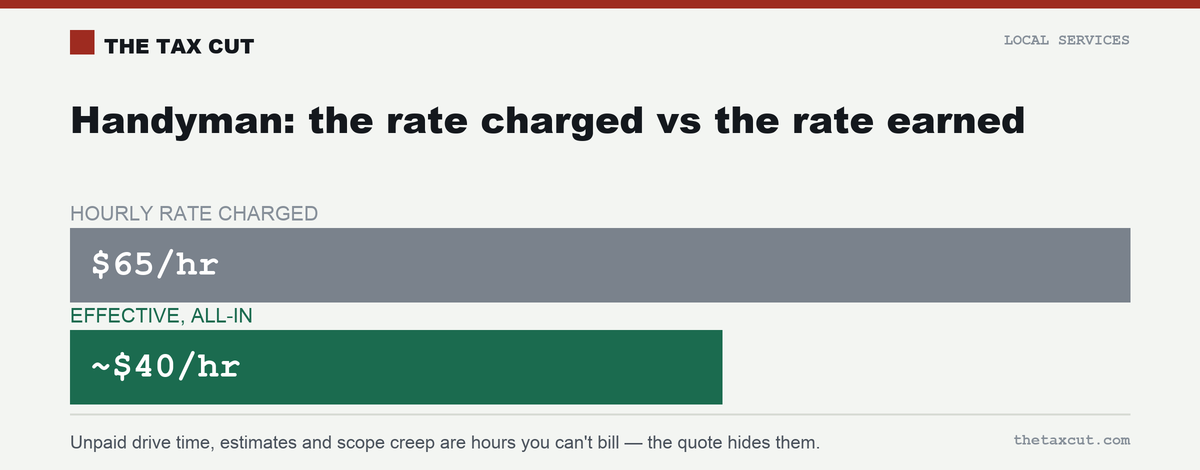
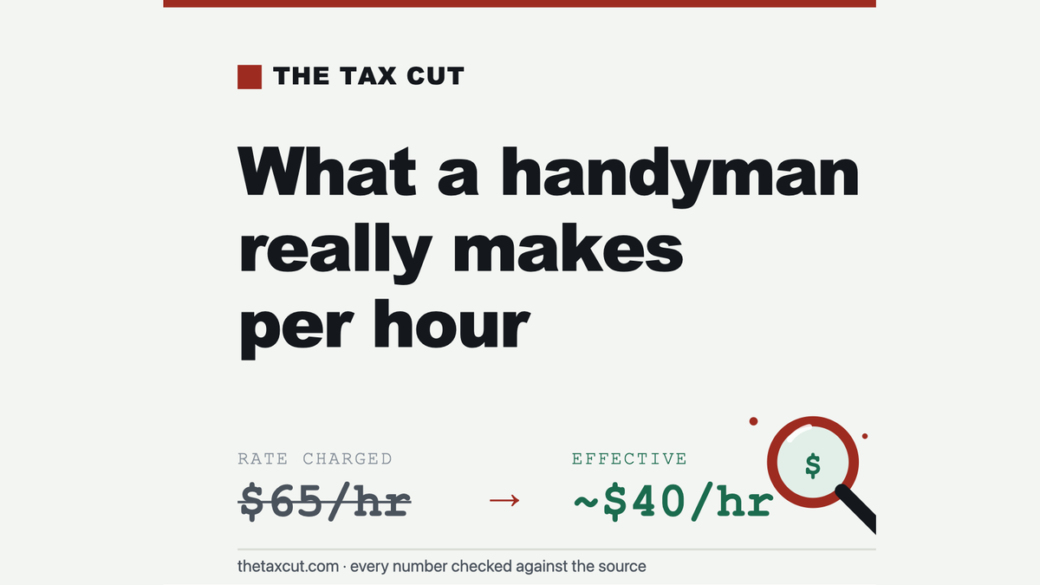
The problem is everything you can’t bill: driving between jobs, giving free estimates that don’t convert, buying materials, and scope creep on fixed-price work. Count those and the effective rate on a $65/hour handyman is closer to $40. It’s still solid — but it’s the difference between the quote and the paycheck, and it’s why underpricing is the fastest way to work hard for little.
Source: Repair-CRM — Handyman hourly rate & profitable pricing (2026) · checked 2026-07-29
Where a job’s money goes
On a fixed-price job, materials and overhead come out before your pay.
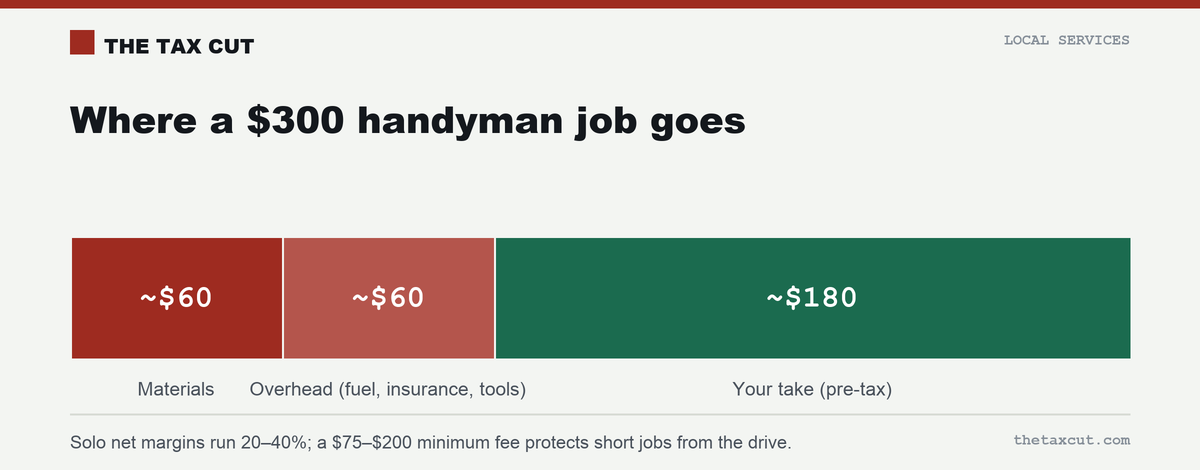
On a $300 job, maybe $60 goes to materials and another ~$60 to overhead (fuel, general-liability insurance, tools, software), leaving ~$180 before tax. Solo handymen run 20–40% net margins — higher than firms with employees, because there’s no payroll. But note the fixed costs are rising: fuel is up ~15% and liability insurance ~12% over two years, quietly compressing the margin.
Source: Housecall Pro — How to price handyman jobs (2026) · checked 2026-07-29
The pricing discipline that protects the wage
The handymen who make good money aren’t charging more per hour — they’re protecting the hours they can’t bill. The tools:
- A minimum service fee ($75–$200) so a 20-minute task still covers the drive. Without it, small jobs lose money.
- Charging for estimates on bigger work, or tightening scope so “quick looks” don’t pile up unpaid.
- Written scope to stop “while you’re here” creep from eating fixed-price jobs.
- Route/scheduling to cut dead miles between jobs — the same density lesson as every trade.
One real example: a handyman in Ohio raised his rate from $40 to $65, cut his hours from 50 to 35 a week, and raised his monthly earnings from $2,000 to $2,800. The lever wasn’t more work — it was pricing the real value of the billable hours and protecting them.
So how much does a handyman really make?
- Charged rate: $50–$160/hour (avg ~$65) — but effective is closer to $40 after unpaid time.
- Per job: solo net margins of 20–40% (~$180 on a $300 job).
- The killers are unpaid hours — drive time, estimates, scope creep — and underpricing.
- The fix is pricing discipline: minimums, scoped quotes, tight routing.
Handyman work is a legitimately good living for the skilled and organized — a solo operator can clear a real income at 20–40% margins. But judge it by the effective hourly, not the sticker rate, and treat pricing discipline as the actual skill. The person who charges $65 and protects their billable hours out-earns the one who charges $85 and gives half their day away for free.
People also ask
How much does a handyman make per hour in 2026?
The charged rate is $50–$160/hour (average ~$65), but the effective rate is closer to $40 once unpaid drive time, estimates, and scope creep are counted.
Source: Repair-CRM — Handyman hourly rate · checked 2026-07-29
Is a handyman business profitable?
Yes — solo operators run 20–40% net margins (no payroll), clearing a real income. The threats are unpaid drive time, underpricing, and scope creep; a $75–$200 minimum fee and scoped quotes protect the margin.
Why do handymen use a minimum service fee?
Because a short task still costs a full drive across town. A $75–$200 minimum ensures small jobs cover travel and setup instead of losing money on them.
How can a handyman make more money?
Raise rates to reflect real value, cut unpaid hours (drive time, free estimates, scope creep), and add minimums — one operator raised earnings from $2,000 to $2,800/month while cutting hours, just by pricing better.
See it for your own numbers
Every calculator shows revenue. This one shows what lands.
Related on The Tax Cut
- Mobile car detailing: the real hourly — the same effective-hourly trap in another service.
- How much does pressure washing really pay? — high margin capped by billable volume.
- Window cleaning profit — route density and minimums, again.