Custom cakes look like a dream side business: bake from home, charge a couple hundred dollars for a beautiful cake, turn a hobby into income. The prices seem generous — $175 for a decorated tiered cake feels like a lot for flour, sugar, and butter. But that’s exactly the trap. The ingredients are cheap; the decorating is not, and it’s measured in hours most bakers never charge for. Add that labor back, and a $175 cake can pay less than minimum wage. Here’s what a custom cake business really makes.
The cake price hides the hours
The material cost is small — ingredients should be just 18–28% of the price. The real cost is the decorating time, and it’s enormous.
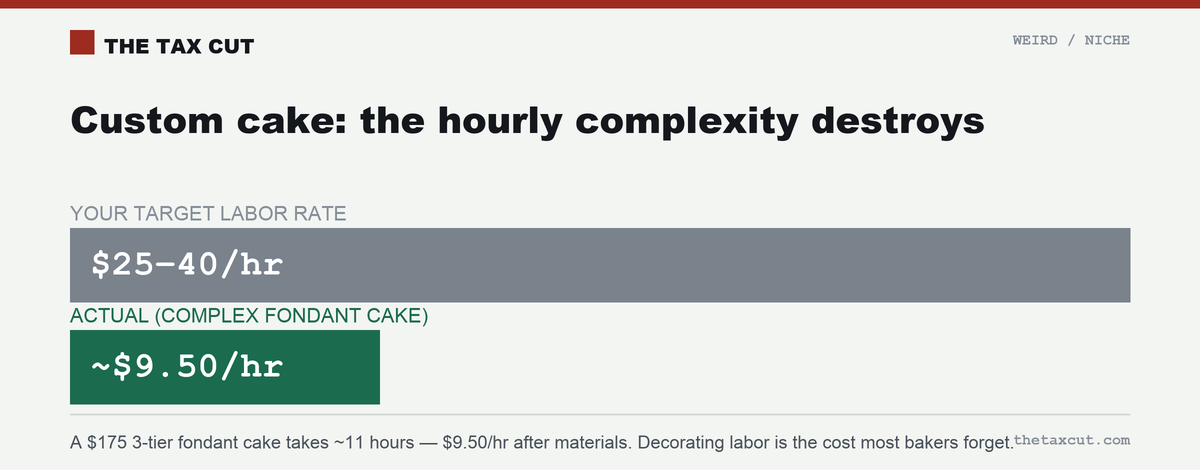
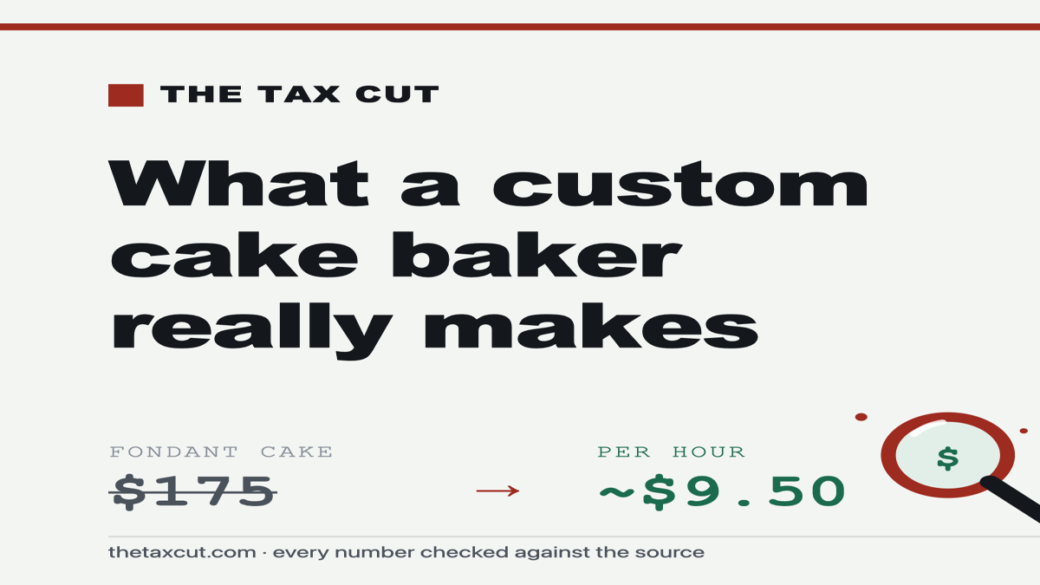
Professional bakers spend 12–25 hours on an average wedding cake — consultation, baking, decorating, delivery, and setup. A 3-tier fondant cake that takes 11 hours and sells for $175 pays about $9.50/hour after materials — below minimum wage. The pricing formula is clear (ingredients + labor at $25–$40/hour + 15–25% overhead + 10–20% profit), but most home bakers skip the labor line entirely, which is why they “sell out” and still barely make money.
Source: BakingSubs — How to price custom cakes (real numbers, 2026) · checked 2026-07-29
What a home baker actually clears
Because the labor per cake is so high, the monthly numbers are modest.
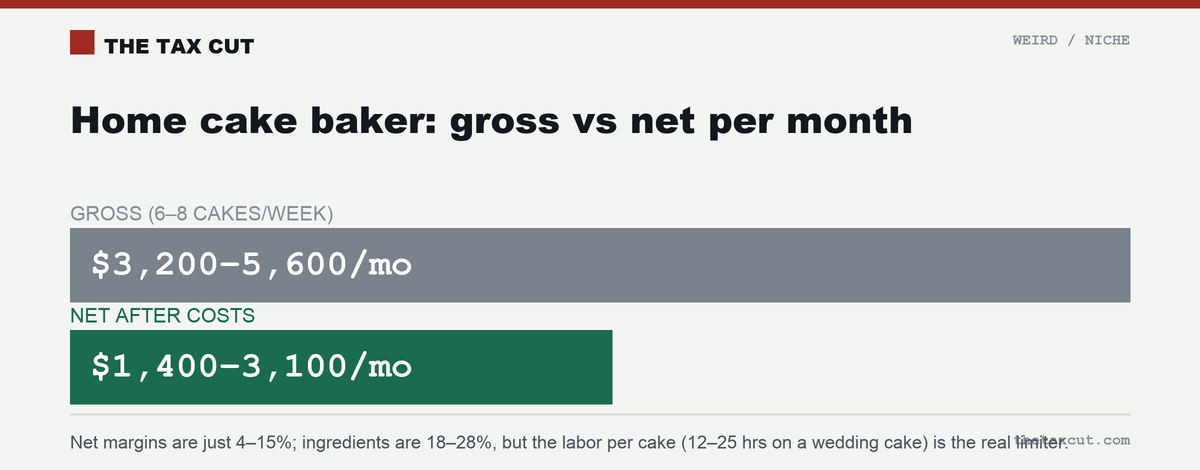
A home baker doing 6–8 cakes a week grosses $3,200–$5,600/month — but nets just $1,400–$3,100 after costs. Net margins run only 4–9% for home operations (5–15% for established specialty bakeries). An 8″ celebration cake priced properly is $85–$250+; a half sheet is $45–$90 — decent tickets, but each one carries hours of hands-on labor that doesn’t scale. Selling more cakes just means more late nights, not proportionally more profit.
Source: BakeProfit — How to price custom cakes (2026) · checked 2026-07-29
Why it doesn’t scale — and how to fix the math
Custom cakes share the trap of candle making and laser engraving, but worse: the per-unit labor is huge and entirely manual. Every cake is baked, filled, crumb-coated, iced, and decorated by hand. There’s no batch button. So the only ways to fix the hourly are to charge for the decorating time (most don’t), simplify designs (fondant sculpting is the hourly killer), or raise prices to reflect the true 12–25 hours a showpiece cake demands.
The bakers who actually profit price the labor, not the ingredients — and often steer customers toward higher-margin, faster designs (buttercream over intricate fondant) or standardized menus that cut decorating time per order.
So is a custom cake business profitable?
- The trap: ingredients are cheap (18–28%), but decorating takes 12–25 hours per showpiece cake.
- The reality: a $175 fondant cake at 11 hours is ~$9.50/hour after materials.
- Home baker net: $1,400–$3,100/month (6–8 cakes/week) at 4–9% margins.
- The fix: price the labor at $25–$40/hour, simplify designs, and raise prices — or work below minimum wage.
Custom cakes can be a real business — the demand for beautiful cakes is genuine and the tickets aren’t small. But it’s the most labor-intensive product business on this site, and the profit lives or dies on one thing: pricing your decorating hours. Charge for the 12–25 hours a cake actually takes and lean toward faster, high-margin designs, and you’ll clear a real income. Price off the “it’s just flour and sugar” instinct, and you’ll bake gorgeous cakes for $9.50 an hour.
People also ask
How much do custom cake makers make?
A home baker doing 6–8 cakes a week grosses $3,200–$5,600/month and nets $1,400–$3,100 after costs (4–9% margins). The limiter is the 12–25 hours of decorating labor per showpiece cake.
Source: BakeProfit — Custom cake pricing · checked 2026-07-29
Why do cake decorators earn so little per hour?
Because they don’t charge for their decorating time. A $175 3-tier fondant cake takes ~11 hours — about $9.50/hour after materials. Ingredients are cheap (18–28%); the hidden cost is the manual labor.
How should I price a custom cake?
Ingredient cost + your labor at $25–$40/hour + 15–25% overhead + 10–20% profit. Most home bakers skip the labor line, which is why they underprice and effectively work below minimum wage.
Is a home cake business worth it?
It can be, but only if you price the decorating labor and lean toward faster, high-margin designs (buttercream over intricate fondant). Otherwise the enormous per-cake labor makes it a passion project that pays below minimum wage.
See it for your own numbers
Every calculator shows revenue. This one shows what lands.
Related on The Tax Cut
- Candle making profit — the same “you forgot your labor” trap, one step less intensive.
- Laser engraving profit — high material margin, killed by per-order design time.
- 3D print farm profit — a maker business where per-unit handling time caps the income.