Retail arbitrage — buying clearance products at Target or Walmart and reselling them on Amazon — is pitched as the easiest on-ramp to FBA: no product to create, no supplier, just a phone scanning barcodes for deals. The model works, but the real margins are a fraction of the “50% profit!” claims, and two things the pitch skips — gating and account risk — quietly lock most beginners out. Here’s the real math.
The margin after Amazon’s fees
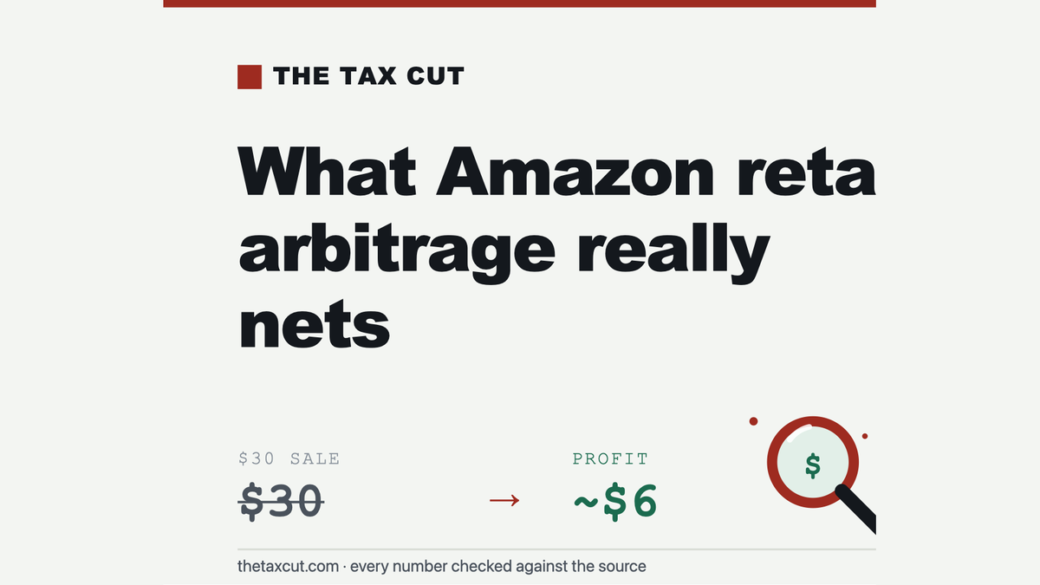
Scan a barcode and the app shows a “profit” — but that number is before Amazon takes its cut. On a $30 sale, the fees are substantial.
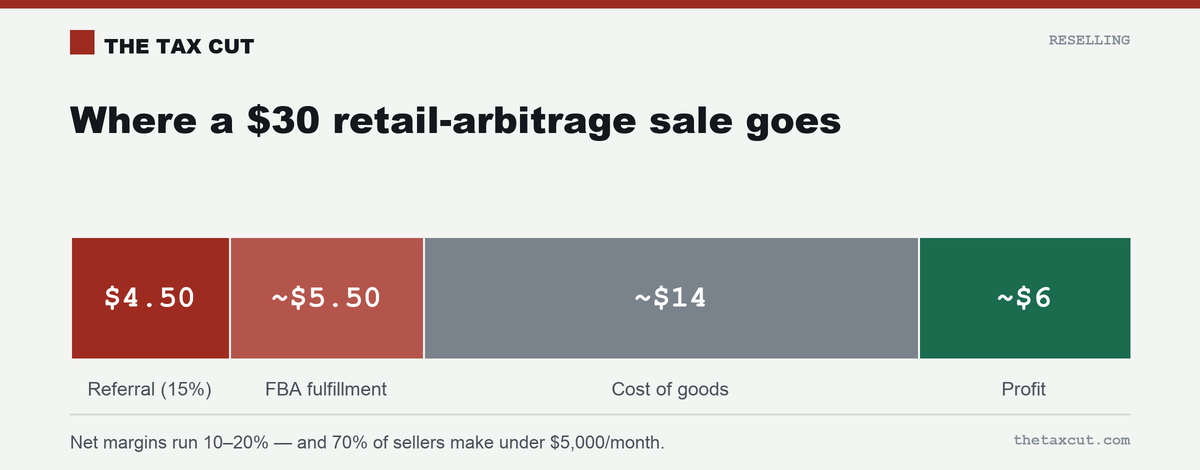
Amazon charges a referral fee (~15%) plus an FBA fulfillment fee of $4–$7 per standard unit. After those and your cost of goods, realistic net margins are 10–20% — not the 50%+ often claimed. Experienced sellers target a minimum 50% ROI (net at least $5 on a $10 buy, or $3/unit) precisely because returns and lost inventory eat the thin ones.
Source: GoAura — Retail arbitrage on Amazon: real margins (2026) · checked 2026-07-29
The wall nobody mentions: gating
Here’s what stops most beginners cold. Amazon has gated (restricted) huge swaths of popular brands — you can’t just list them. Ungating requires approval that’s often difficult or impossible, and retail receipts no longer work — you need wholesale invoices or Letters of Authorization from the brand, which a clearance shopper doesn’t have.
So the exact products that look most profitable on the scanner are frequently the ones you’re not allowed to sell. Retail arbitrage in 2026 is as much about finding ungated profitable items as profitable ones — a much smaller pool than the pitch implies.
The account risk that ends businesses
Even when you can list, there’s a threat FBA gurus gloss over: IP complaints and inauthentic claims. A brand can file a complaint, or Amazon can demand an invoice you don’t have, and your listing — or your whole account — can be suspended. Retail receipts often aren’t accepted as proof of authenticity, so an arbitrage seller is structurally exposed to account health issues that a wholesale or private-label seller isn’t.
That’s why the earnings are so skewed:
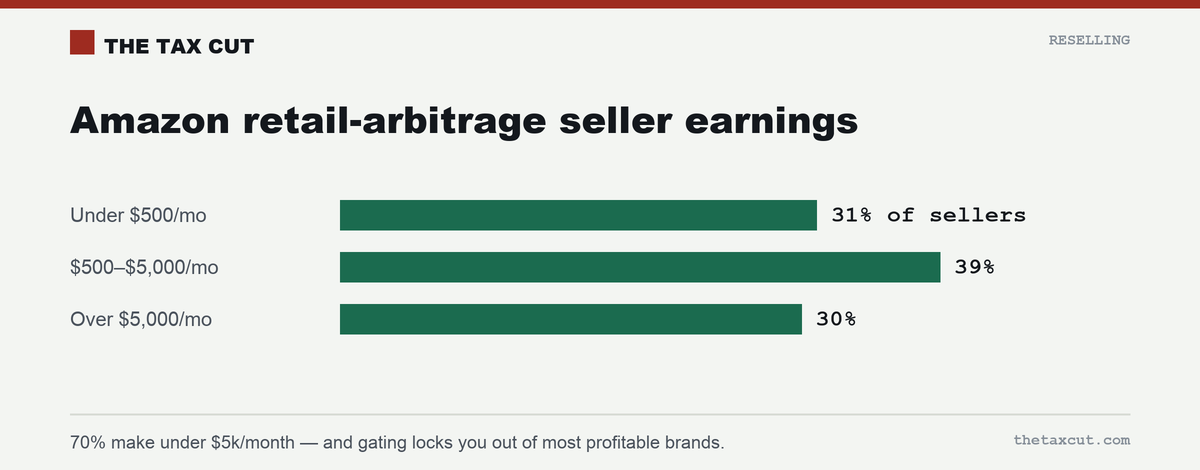
70% of retail-arbitrage sellers make under $5,000 a month, and 31% make under $500. It’s real income for the disciplined few who master sourcing and stay inside the gating and account rules — but it’s a grind, not the passive scanner-money the ads sell.
Source: RocketSource — Is online/retail arbitrage still profitable? (2026) · checked 2026-07-29
So is Amazon retail arbitrage worth it?
- Margins: 10–20% net after referral and FBA fees — target 50% ROI / $3+ per unit for a cushion.
- Gating: most profitable brands are restricted; retail receipts don’t ungate them.
- Account risk: IP complaints and invoice demands can suspend listings or accounts.
- Reality: 70% of sellers make under $5k/month; 31% under $500.
Retail arbitrage can work — sourcing skill plus discipline around gating and account health does produce real income. But it’s a low-margin, high-friction sourcing business with genuine account risk, not the “scan and profit” side hustle the ads promise. Price in the fees, verify you can actually sell the item, and treat account health as the real asset.
People also ask
Is Amazon retail arbitrage still profitable in 2026?
Yes, but marginally — net margins are 10–20% after Amazon’s ~15% referral and $4–$7 FBA fees, not the 50% often claimed. And 70% of sellers make under $5,000/month.
Source: GoAura — Retail arbitrage margins · checked 2026-07-29
What is gating in Amazon retail arbitrage?
Amazon restricts many brands and categories, requiring approval to list. Ungating often needs wholesale invoices or Letters of Authorization — retail receipts no longer work — so clearance shoppers are locked out of many profitable brands.
Can your Amazon account get banned for retail arbitrage?
Yes. IP/inauthentic complaints or invoice demands can suspend listings or your whole account, because retail receipts often aren’t accepted as proof of authenticity. Account health is the real risk.
How much do retail arbitrage sellers make?
Most make modest amounts: 31% under $500/month and 70% under $5,000/month. The disciplined minority who master sourcing and stay inside the rules make more, but it’s a grind.
See it for your own numbers
Every calculator shows revenue. This one shows what lands.
Related on The Tax Cut
- Amazon FBA storage fees (2026) — the other Amazon fees that eat inventory margins.
- How much do sneaker resellers actually profit? — fee-minus-cost math on a different marketplace.
- eBay fees: what a $50 flip nets — reselling margins without the gating problem.